
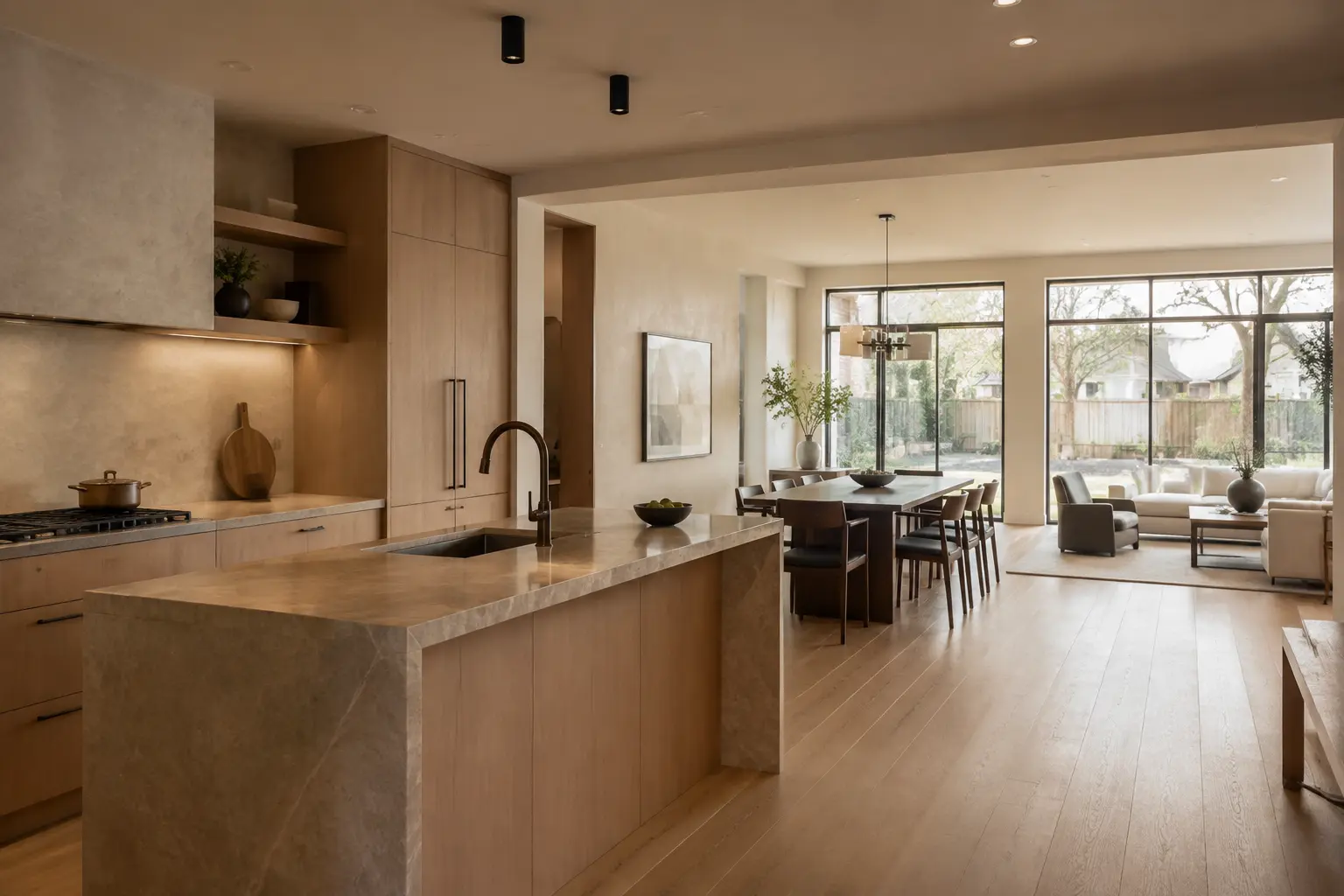
A main-floor renovation is most useful when it improves the ordinary parts of the day: arriving with bags, preparing food, moving around an open dishwasher, gathering at the table, watching television, working from home, and keeping visual clutter under control.
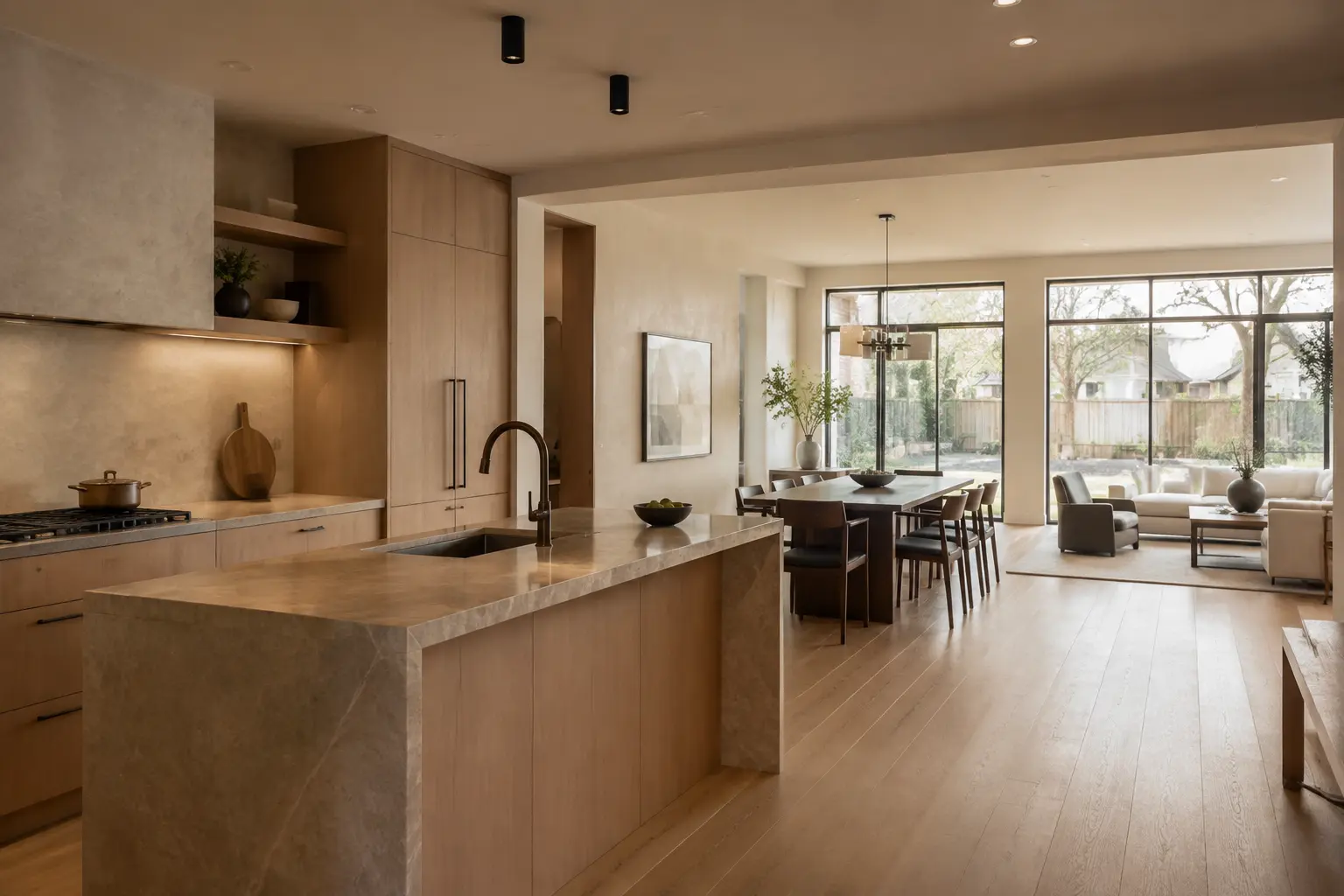
Record the friction points
For several days, note where paths cross, doors conflict, groceries land, small appliances accumulate, coats collect, and seating blocks movement. Observe how the floor works with guests and at the busiest hour—not only when it is tidy.
Test furniture and clearances early
Kitchen islands, dining tables, stools, sofas, coffee tables, and circulation need to coexist. A dimension that looks generous on an empty plan may become tight once doors, chairs, and people are moving. Furniture also determines where floor outlets, pendants, sconces, and focal points belong.
Give the entry enough responsibility
The entry may need durable flooring, concealed coats and shoes, bags, a bench, charging, keys, and a route that does not cut through the main seating area. A beautiful foyer without enough working storage can move daily clutter into the renovated kitchen.
Balance connection with control
Decide which activities should be visible and which should be concealed. A pantry, appliance garage, closed media storage, pocket door, or defined office can preserve the calm of a connected floor.
Include the staircase in material planning
Main-floor flooring affects nosings, treads, risers, landings, baseboards, and upper-floor transitions. Railings and wall treatments remain visible from several rooms. Leaving stairs for a later decision can create a difficult seam at the centre of the design.
Build lighting scenes around activities
Cooking, dining, cleaning, relaxing, and entertaining do not need the same light level. Group fixtures logically and consider how decorative lights appear from adjacent rooms. Consistent colour temperature helps several zones feel connected even when fixture types differ.
Once function is working, finish decisions become easier to judge because every material has a known role in the complete floor.