
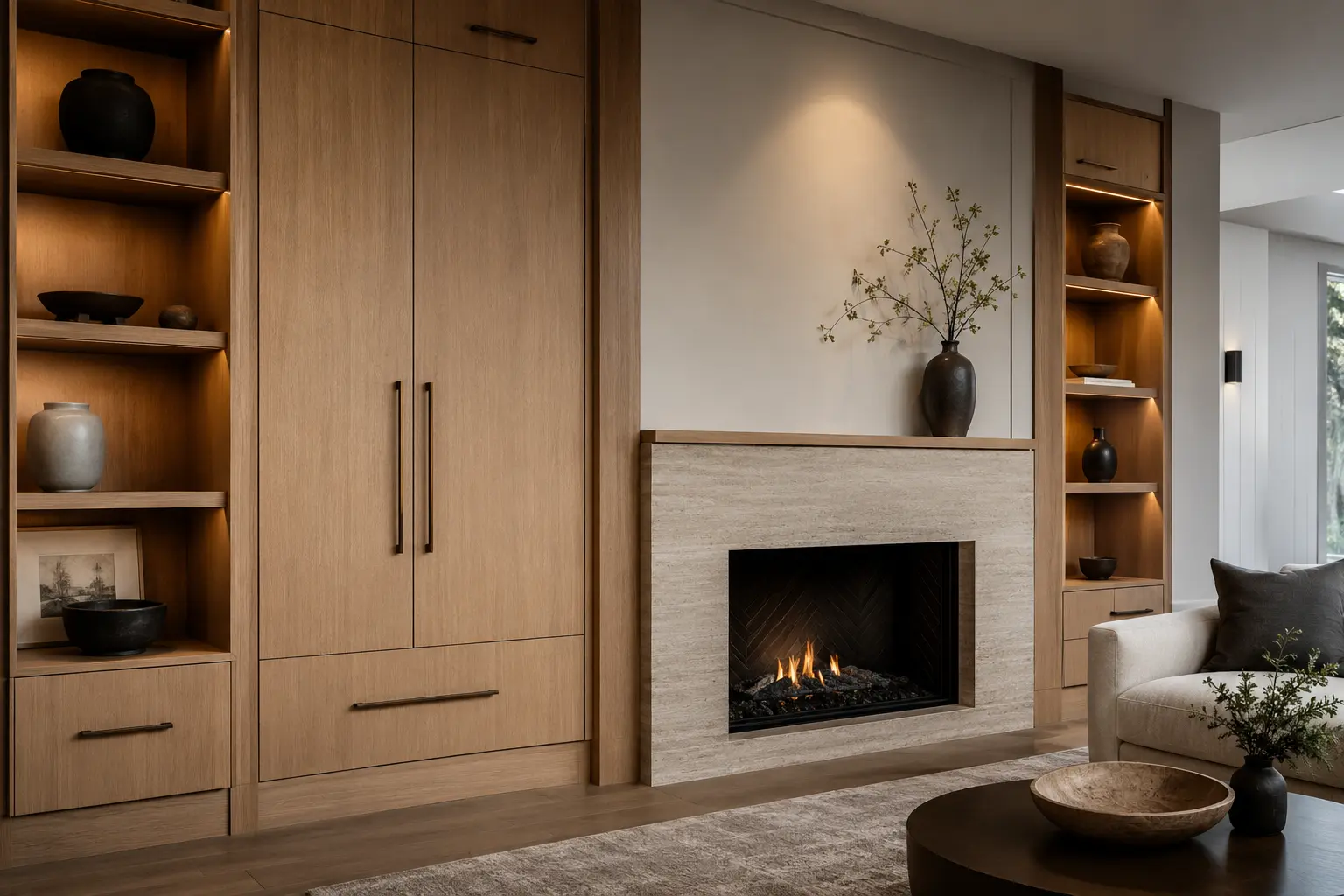
A cohesive interior is not created by ordering the same finish for every room. It is created by a hierarchy: a small number of anchoring decisions, several controlled supporting materials, and clear rules for where variation is allowed.
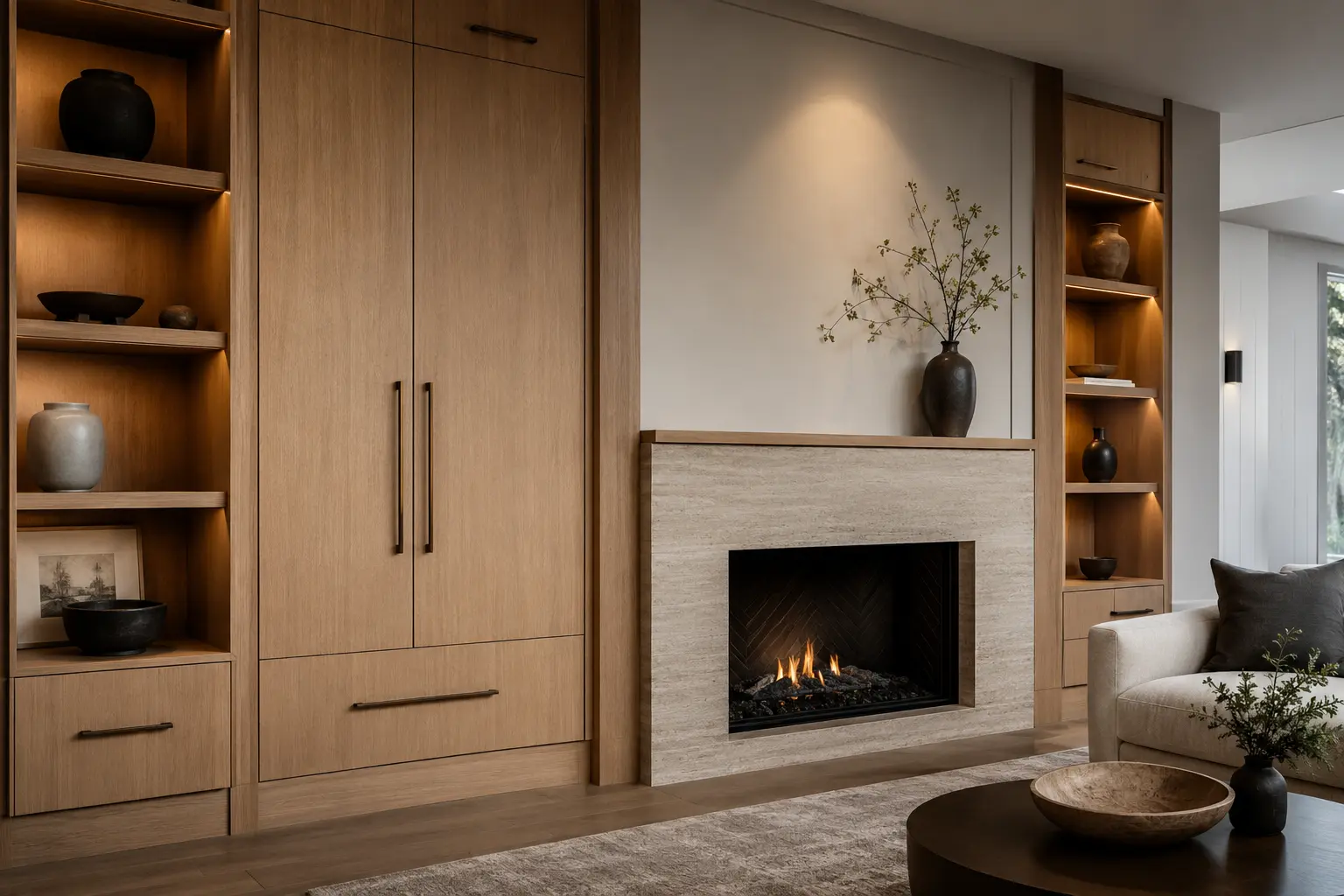
Start with fixed and repeated elements
Flooring, stairs, interior doors, trim, major cabinetry, hardware, and wall colour travel across large areas or repeat many times. Resolve these before isolated feature materials because they establish the background every room must meet.
Control undertones in real light
Warm and cool undertones can shift across daylight, evening light, and different room orientations. Review large samples in the actual home when practical and compare materials side by side. A sample that works alone may conflict once it meets flooring, stone, and paint.
Choose a dominant wood direction
Several wood species and stains can coexist, but uncontrolled near-matches often appear accidental. Decide which wood dominates, which can contrast, and where painted finishes create separation. Grain scale and sheen matter as much as colour.
Use feature materials selectively
A dramatic stone, tile, metal, or wall treatment has more impact when surrounding rooms are quiet enough to support it. Identify a limited number of focal moments and keep circulation spaces disciplined.
Repeat details, not complete rooms
A bronze hardware finish, slim shadow line, door profile, oak accent, or lighting temperature can reappear in several spaces without repeating the same cabinet colour or tile. These smaller echoes create recognition across the home.
Document the palette
A finish schedule should record exact products, colours, sheens, dimensions, grout, edge details, profiles, hardware, and intended locations. Photography and names alone are not enough to reproduce a coordinated selection on site.
Consider maintenance and replacement
Ask how materials wear, clean, repair, and transition to retained surfaces. A premium choice should support the household’s actual use, not only the design presentation.